
August 7, 2026
Have You Realized You’re Worse at Multitasking?
Does multitasking hurt productivity? Learn how task switching, excessive browser tabs, and small distractions affect focus and what helped me change.
Why I Stopped Multitasking: The Hidden Cost of Task Switching
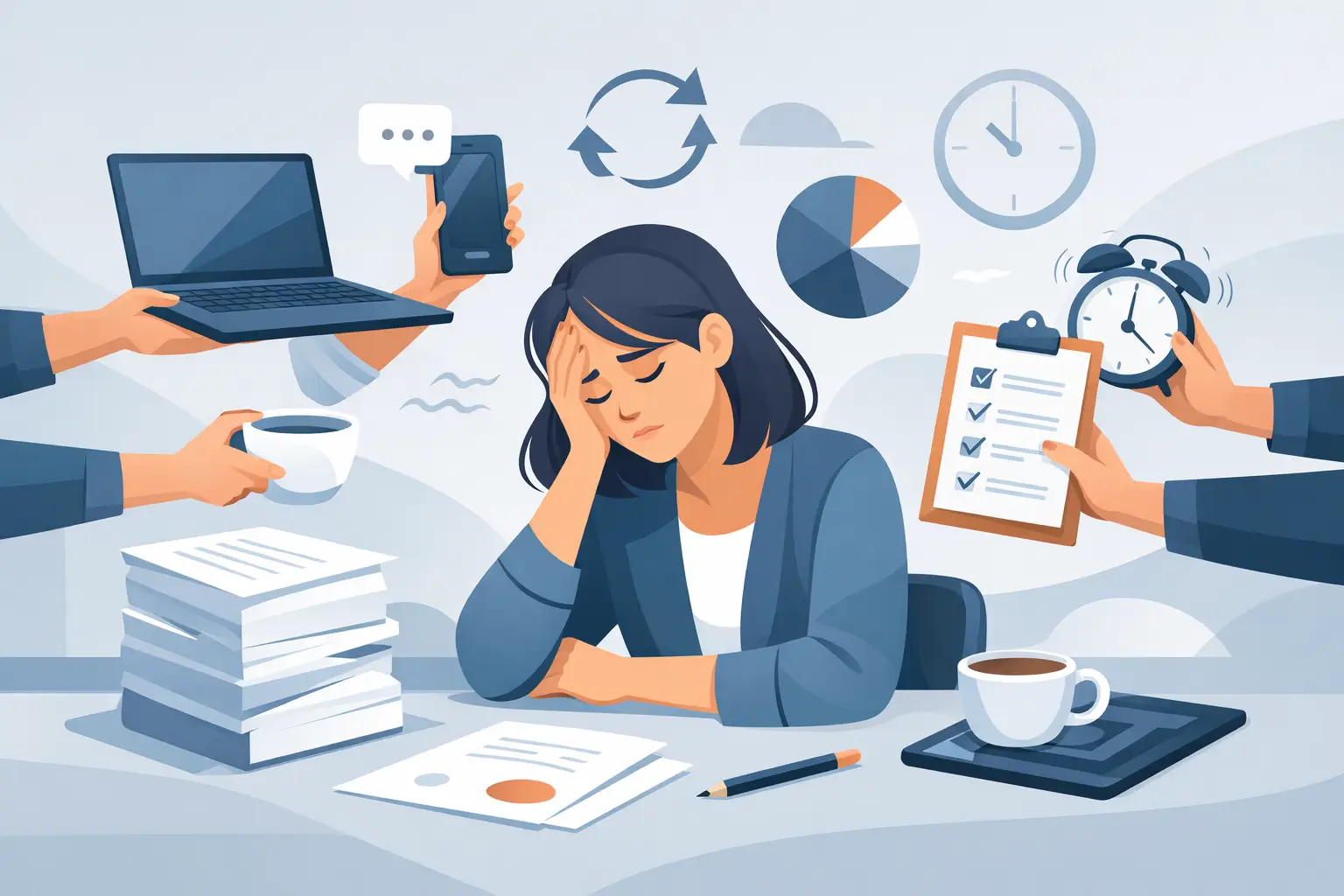
I've been paying more attention to my browsing habits over the last few months, and one thing genuinely surprised me: I'm much worse at multitasking than I thought.
For a long time, I assumed multitasking made me more productive. Working on several things at once felt efficient, as if I were getting more done and saving time.
I could answer a message while reading an article, switch to another tab while waiting for something to load, check an email in the middle of a task, and keep music or a video playing in the background.
Because I was always doing something, it felt productive.
But the more closely I observed how I actually worked, the more I noticed how frequently I jumped between browser tabs, applications, messages, and completely different tasks.
Every switch felt tiny on its own. Together, they made it much harder to stay focused.
I would lose track of what I was doing, reread the same paragraph, forget why I had opened a tab, and spend time reconstructing my train of thought. After a while, my mind felt foggy even though I hadn't completed as much as expected.
That was when I began questioning whether I was really multitasking or simply interrupting myself repeatedly.
Multitasking often feels more productive than it is
Multitasking creates a strong feeling of activity.
Several applications are open. Notifications are arriving. Messages are being answered. Tabs are constantly changing. It can feel as though you're managing everything at once.
Activity, however, isn't always the same as progress.
I began noticing that many of my busiest work sessions were also the least satisfying. I had touched several tasks but finished very few of them. At the end of the session, it was difficult to explain what I had actually accomplished.
The problem wasn't that every switch consumed a large amount of time. Most lasted only a few seconds. The problem was the cumulative effect of constantly moving my attention.
A typical pattern looked like this:
1. Begin working on an important task.
2. Remember that I need to check something online.
3. Open another tab.
4. Notice an email notification.
5. Reply to the email.
6. Return to the original task.
7. Spend time remembering where I stopped.
8. Repeat the process a few minutes later.
Each action seemed reasonable in isolation. Together, they fragmented the entire work session.
Multitasking or task switching?
What we commonly call multitasking is often rapid task switching.
Instead of giving full attention to several demanding tasks simultaneously, your attention moves from one task to another. You write a few lines, check a message, return to the document, open a new tab, and then try to continue writing.
The switch may happen quickly, but the context doesn't always return immediately.
You may need to remember:
- What you were trying to accomplish.
- Which decision you had just made.
- Where you stopped reading or writing.
- Which detail you still needed to verify.
- What the next step was supposed to be.
This explains why a day filled with small interruptions can feel mentally exhausting. Your attention is repeatedly asked to leave one context and rebuild another.
Not all combinations of activities are equally demanding. Listening to familiar instrumental music while completing a repetitive task may feel comfortable. Walking while having a conversation may also be perfectly manageable.
The difficulty becomes more noticeable when two activities compete for the same kind of attention for example, writing while following a podcast, reading while responding to messages, or solving a complex problem while monitoring several conversations.
The hidden cost of browser tab switching
Browser tabs made my task-switching habit particularly easy to overlook.
Every tab represented a different possibility:
- The task I was supposed to complete.
- An article I wanted to read later.
- Email or social media.
- A video playing in the background.
- Documentation for another project.
- A search I had started earlier.
- Something interesting but unrelated.
Keeping everything open felt convenient. I told myself that I was organizing information and avoiding the effort of finding it again.
In practice, the tab bar became a list of invitations competing for my attention.
Sometimes I switched intentionally. Other times I opened a tab almost automatically, without deciding that it was the right moment to change tasks.
The interruption didn't need to last long to affect the flow of work. Even a quick visit to another website could make returning feel slightly harder.
Over an entire day, those small moments added up.
Why do we keep switching tasks?
I initially assumed I switched tasks because I was easily distracted. But after observing the pattern, I realized there were several different reasons.
The current task became difficult
When I reached a confusing or uncomfortable part of a task, switching tabs provided immediate relief. Checking something easier allowed me to avoid the difficult decision for a moment.
I was waiting for something
A page was loading, a build was running, or a response hadn't arrived yet. Instead of waiting briefly, I opened another task and sometimes forgot to return.
I wanted quick stimulation
Important work doesn't always provide immediate feedback. Messages, social media, news, and videos offer something new almost instantly.
I hadn't defined the next step
Vague tasks created uncertainty. If I didn't know exactly what to do next, unrelated tabs became more attractive.
Switching had become automatic
Sometimes there was no clear reason. Opening certain websites had simply become part of my browsing routine.
Understanding why I switched was more useful than criticizing myself for doing it. Different causes required different adjustments.
Background music can also divide attention
I also noticed that music sometimes affected my ability to focus.
This wasn't true in every situation. Familiar or instrumental music could make certain tasks more enjoyable. But music with lyrics, unfamiliar songs, or tracks I wanted to actively follow sometimes competed with reading, writing, or complex thinking.
The effect was subtle. I didn't always notice an obvious interruption. I simply felt that part of my attention wasn't fully available for the task.
Instead of creating a strict rule that music is good or bad for productivity, I started paying attention to the context:
- What type of work am I doing?
- Does the music help me settle into the task?
- Am I following the lyrics instead of thinking?
- Do I work differently in silence?
- Does the effect change depending on my energy?
Sometimes music helps. Sometimes silence works better. Awareness makes it possible to choose instead of following the same routine automatically.
What changed when I focused on one task at a time
The biggest improvement came from something simple: choosing one priority and keeping it at the center of the work session.
That doesn't mean I now spend an entire day on one activity. It means that, during a defined period, I try to avoid switching unless the change is genuinely necessary.
When I began working this way, I noticed several differences:
- It became easier to remember what I was doing.
- I spent less time reopening context after interruptions.
- Complex tasks felt more approachable.
- I completed more work before moving to something else.
- My sessions felt calmer and less mentally crowded.
- I became more aware of the moments when I wanted to escape a difficult task.
The work didn't suddenly become effortless. I still became distracted, changed priorities, and had days when concentrating felt difficult.
The difference was that I could recognize the pattern earlier.
Practical ways to reduce task switching
You don't need to eliminate every interruption or redesign your entire routine. A few small changes can make single-tasking easier.
1. Choose the highest-priority task
Before starting, decide which task matters most right now.
Try to make it specific. “Work on the project” leaves too much uncertainty. “Draft the onboarding page introduction” gives your attention a clearer destination.
2. Keep only the necessary tabs open
Close, save, or group anything unrelated to the current task.
If you are worried about losing something useful, add it to a reading list or bookmark folder instead of keeping it permanently visible.
The objective isn't to maintain an empty browser. It is to reduce the number of unrelated choices presented to you during focused work.
3. Put your phone outside your field of view
Moving your phone away doesn't require blocking it or turning it off permanently. It simply adds a small pause between the impulse to check and the action itself.
That pause can be enough to help you return to your original intention.
4. Keep a distraction note
When an unrelated thought appears, write it down instead of acting on it immediately.
For example:
- Search for a new keyboard.
- Reply to a message.
- Check an analytics report.
- Read an article.
You can review the list after the session. This reassures your mind that the thought won't be forgotten without requiring an immediate switch.
5. Organize tasks by priority
A short, ordered checklist can reduce uncertainty about what comes next.
Finish or deliberately pause the current priority before moving to the next one. If priorities change, make that decision consciously rather than following whichever notification appeared most recently.
6. Create boundaries for communication
If your work allows it, check email and messages at chosen moments rather than keeping them at the center of every task.
You don't need to become unavailable. The purpose is to prevent every incoming message from automatically becoming your new priority.
7. Notice before trying to control
Before introducing strict rules, observe the pattern.
Which websites do you open most often? When do you switch tasks? What usually happens immediately before the switch? Which types of work are most affected?
You may discover that the problem isn't the total number of tabs or notifications. It may be one particular habit occurring at a predictable moment.
Awareness works better for me than punishment
Strict website blockers can be helpful for some people, but I didn't want to treat every distraction as something that had to be completely forbidden.
Many websites can be useful or distracting depending on the situation. YouTube might contain a tutorial for work and entertainment later in the day. Social media might be part of someone's job. Email can be necessary without needing to remain open constantly.
What I needed first was visibility.
I wanted to understand where my browsing time went, which websites repeatedly pulled me away, and how my patterns changed across the day or week.
That awareness-first idea is part of why I built Focus Companion. It helps you categorize websites as Focus, Distraction, or Neutral, understand your browsing patterns, and make more intentional choices without completely blocking access or judging your behavior.
The goal isn't to force perfect concentration. It is to make task switching and digital habits easier to notice.
Single-tasking doesn't mean becoming inflexible
Focusing on one task at a time doesn't mean ignoring urgent situations or refusing to adapt.
Priorities can change. Some work genuinely requires monitoring several systems, responding to people, or moving between different sources of information.
Single-tasking is not about pretending those realities don't exist. It is about reducing unnecessary switching when sustained attention would be more useful.
You can still:
- Change tasks intentionally.
- Respond to something genuinely urgent.
- Use several sources for the same objective.
- Take breaks when attention fades.
- Adjust your plan when new information appears.
The important distinction is whether the switch supports your current purpose or simply happens automatically.
A simple experiment to test your multitasking habits
If you're unsure whether task switching affects you, try this experiment for one work session:
1. Choose one clearly defined task.
2. Close or hide unrelated tabs.
3. Put your phone out of sight.
4. Work for 30 minutes.
5. Write down every moment you feel tempted to switch.
6. At the end, review what triggered those impulses.
You don't need to resist every distraction perfectly. The purpose is to observe what happens.
Then compare the session with the way you normally work:
- Did you complete more of the task?
- Did the work feel calmer?
- How often did you want to switch?
- Which distractions appeared automatically?
- Was it easier or harder than expected?
One session won't define your ideal routine, but it can reveal patterns that are difficult to notice during a normal day.
I wasn't multitasking, I was fragmenting my attention
The biggest realization for me was that multitasking wasn't helping me do several important things simultaneously.
Most of the time, I was fragmenting my attention across several unfinished activities.
I still switch tabs and tasks. I still listen to music, check messages, and occasionally open a website without thinking. The objective was never to become perfectly focused.
But now I notice those moments more often.
Keeping only the tabs I need, moving my phone out of sight, choosing a clear priority, and recording unrelated thoughts have made a bigger difference than I expected.
Sometimes better productivity doesn't require a more complicated system.
It begins with noticing how frequently your attention leaves the task and giving it a clearer reason to stay.
Have you noticed something similar? Does multitasking help you, or do you work better when you focus on one thing at a time?
Put the idea into practice
Understand your browsing habits
Focus Companion is a privacy-first browser productivity coach that helps you notice distraction patterns and make calmer changes.
Stay connected
Join the Community
Share your experience with focus, multitasking, and calmer workdays.
